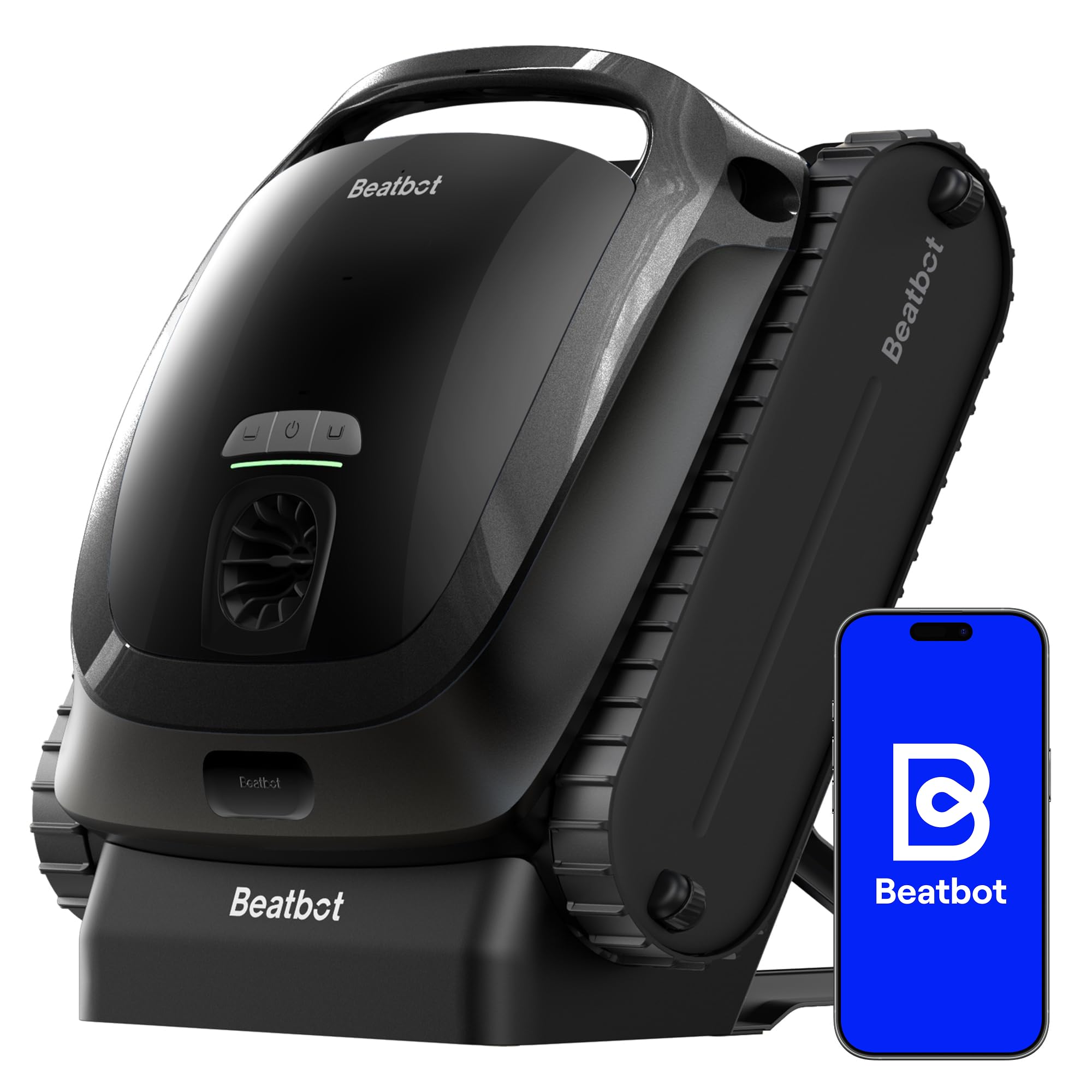
Create a pool profile
An inground pool may be rectangular or freeform, shallow throughout or divided by a steep transition, and finished with different materials. Record those facts before building a shortlist. Include the length, width and deepest point along with benches, stairs and drains. The robot must interact with that actual layout, not an abstract area figure.
Share photographs of unusual features with the manufacturer. A general statement that a product works in inground pools is not a promise about every ledge or slope. If the pool has recently been resurfaced or repaired, check the pool builder's advice as well as the cleaner's compatibility information. Resolve conflicting instructions before using the equipment.
Treat walls and waterline as distinct requirements
Floor coverage, wall climbing and waterline scrubbing should each be verified for the precise model. A product may support some of these without supporting every area you care about. Compare the mode descriptions and look for instructions explaining how the robot transitions between them, rather than inferring coverage from its tracks or brush arrangement.
Ask how the manufacturer describes cleaning around corners and interrupted waterlines. Steps, skimmer openings and benches can create a very different environment from a plain vertical wall. If no specific support is documented, keep manual brushing in your maintenance plan. That makes your purchasing expectations more realistic and avoids paying a premium for an assumed capability.
Match the filter to the debris problem
Describe what you collect now: leaves, seed pods, sand or a mixture. Then check the supplied filter arrangement and the procedure for emptying it. Determine whether any optional fine filter is included in the offer you are comparing. A package with a different filter set is not necessarily equivalent even if the cleaner's body is identical.
The relevant ownership question is how often you expect to stop and rinse the system. Basket volume alone cannot predict that without knowing the debris. Look for access that you can manage easily at the rinsing location. Avoid treating a filtration specification as a promise that the robot replaces the pool's broader water-care routine.
Build a shortlist around the hardest requirement
Choose the difficult requirement first: unusual ledges, a large floor area, handling from a raised deck or demanding debris. Exclude candidates that cannot document compatibility with that requirement. Compare the remaining models by the features that reduce your routine work, rather than accumulating every premium feature on the market.
The official sources below provide examples of model-specific coverage information. They are manufacturer descriptions, not our test results. If your priority is a step or shallow platform, get written confirmation for its dimensions before ordering. A suitable return policy and service route help manage purchase uncertainty, but neither turns an unverified capability into an established fact.
Check the details
Sources & scope
We use manufacturer information to describe stated features. It does not prove real-world performance or make every version equivalent. Confirm current US specifications and the exact bundle before buying.
Read our research approach →